
Wood textured concrete merges the strength of concrete with the warmth of wood aesthetics. This architectural technique has become increasingly popular in modern construction for its ability to replicate the look of natural wood while offering the resilience of concrete.
Builders and architects now favor this design for projects where wood might traditionally be used but faces challenges like weathering, pests, or maintenance concerns. By imprinting or molding wood grain patterns into concrete surfaces, structures maintain a rustic charm without compromising longevity.
Advantages of Using Wood Textured Concrete
Using wood textured concrete brings several practical and aesthetic benefits. Not only does it improve visual appeal, but it also simplifies maintenance over the long term.
Authentic Appearance Without the Upkeep
Wood-textured concrete mimics timber grain patterns in remarkable detail. From cedar to reclaimed barn wood, these textures can be molded into slabs, panels, or vertical surfaces. As a result, projects gain the visual warmth of wood without suffering from its vulnerabilities.
Additionally, since these finishes are made with concrete, they avoid issues like rot, termites, and warping. They stay beautiful with minimal effort, even in harsh climates.
Long-Term Savings on Maintenance and Repair
Natural wood requires sealing, staining, and frequent inspections. With concrete that carries a wood texture, ongoing costs are drastically reduced. The durability of concrete ensures fewer replacements, lower labor expenses, and better performance over decades.
These textured surfaces also resist fading, especially when treated with modern UV-protective sealants. Thus, they make sense financially and functionally for residential patios, walkways, and public projects.
Wood Plank Concrete Stamp by Stamped Concrete Supplies
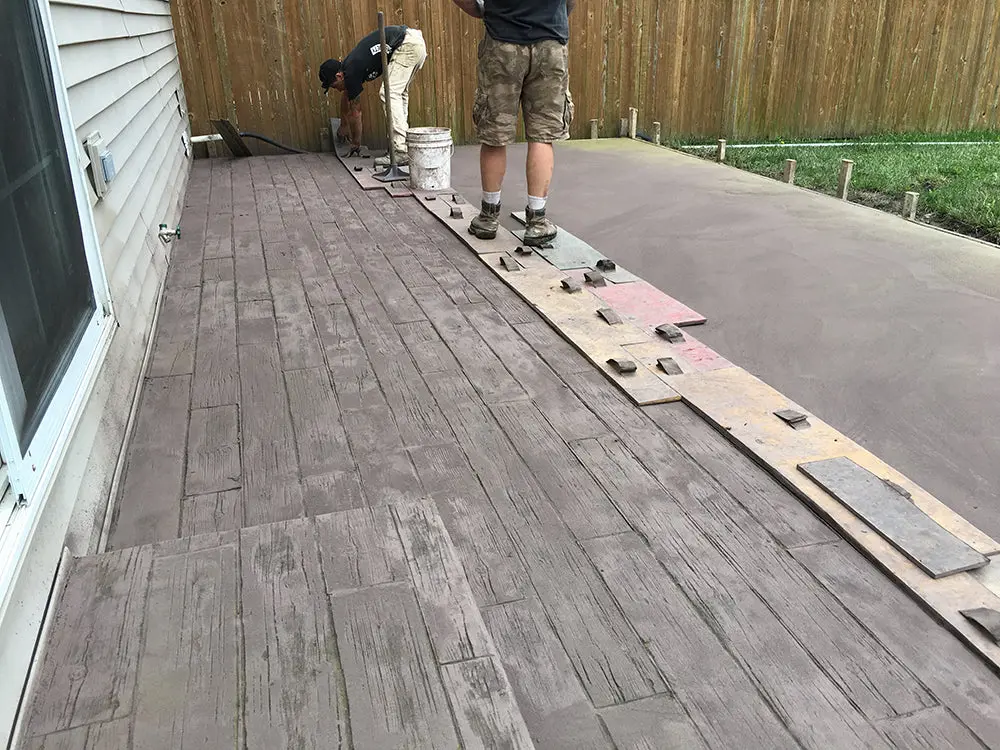
Stamped Concrete Supplies offers a Wood Plank Concrete Stamp that replicates 12″ x 48″ wood boards with lifelike texture. It’s ideal for patios, pool decks, and pathways.
This stamp is reusable, flexible, and works with various concrete coloring systems. The result is a natural wood look combined with the endurance of stamped concrete. Contractors prefer this tool for residential and light commercial installations.
Butterfield Color Wood Texture Roller
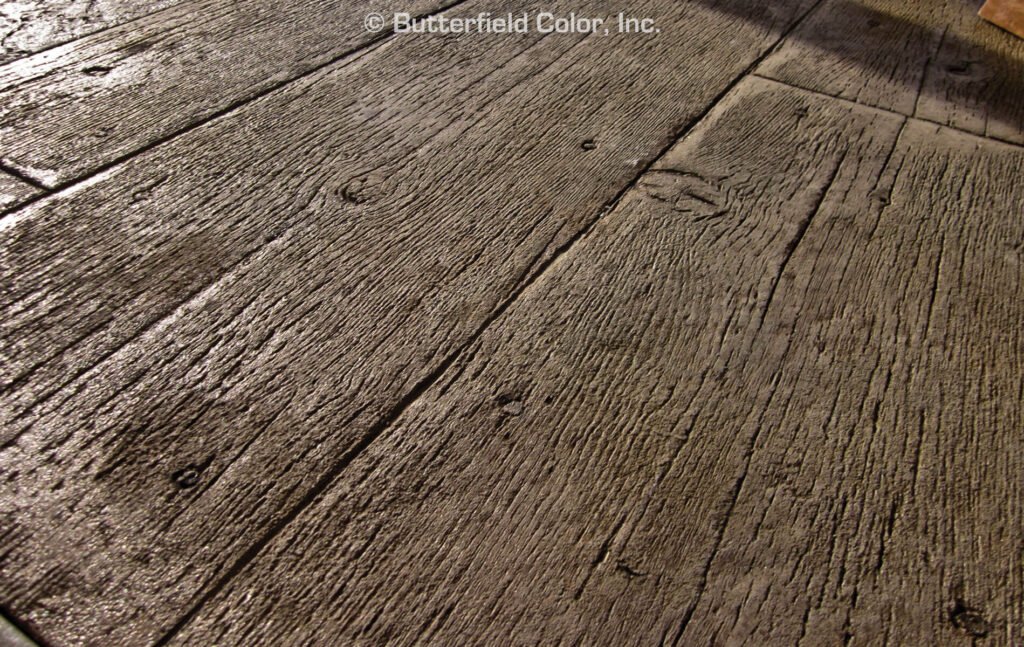
Butterfield Color provides texture rollers specifically designed to imprint wood grain into fresh concrete. Their rollers come in several grain types and widths, perfect for different applications and design preferences.
This solution allows fast application across large slabs. It suits decorative patios, outdoor dining areas, and garden paths where natural wood would typically be installed but isn’t practical long-term.
Brickform Boardwalk Stamp Pattern
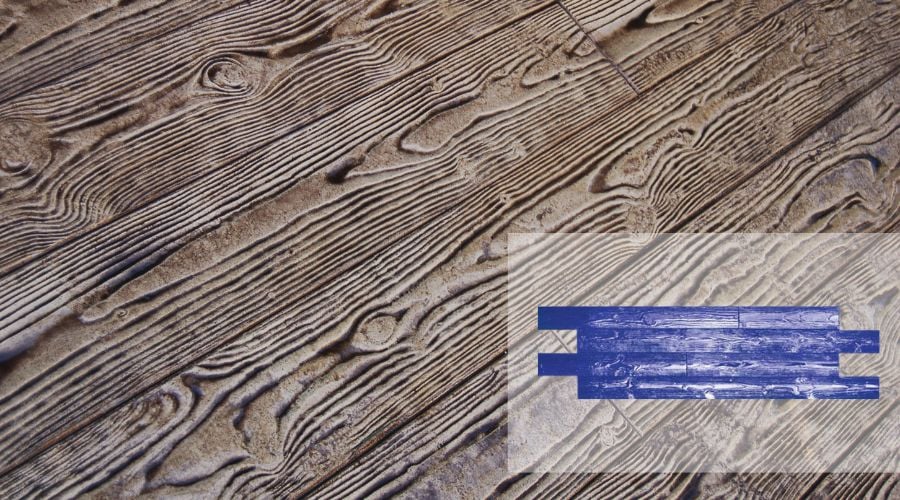
Brickform’s Boardwalk stamp replicates old timber boardwalks with authentic detail. Each mat produces a rustic, textured look that works well in historical renovations and seaside designs.
This product includes multiple stamp sizes and detailed texture skins, making it suitable for large-format concrete pours. It’s frequently used in theme parks, civic centers, and boardwalk restoration projects.
Proline Wood Plank Stamp (RW800)
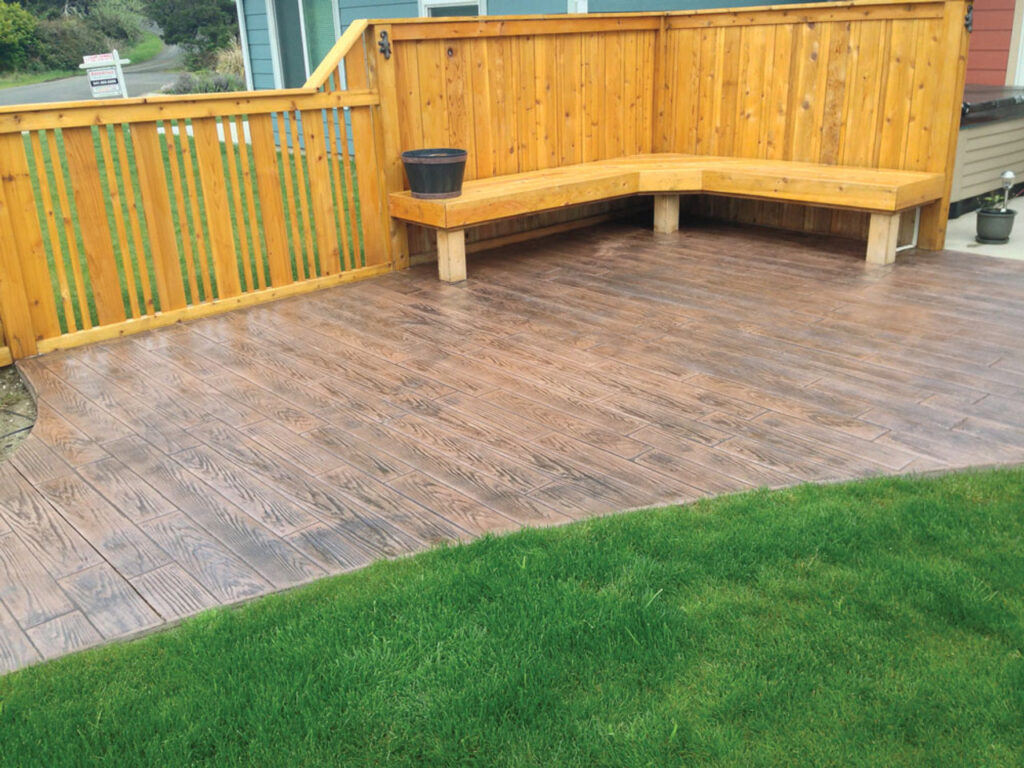
The RW800 by Proline features 12-inch by 6-foot wood planks with nail holes and realistic knots. It produces long, continuous wood textures and is ideal for driveways, commercial patios, or retail entrances.
Designed to provide depth and shadow, the RW800 combines well with stains and antiquing washes. This enhances realism while preserving concrete’s strength under foot traffic and weather exposure.
Marshalls Woodstone Paving
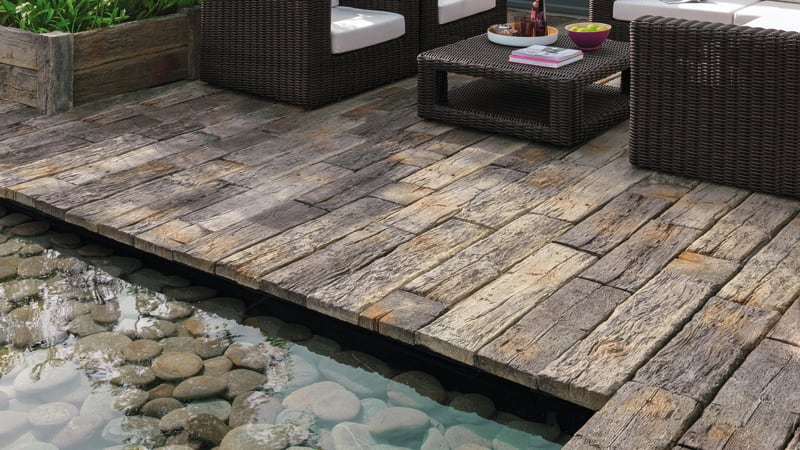
Marshalls offers Woodstone Paving concrete slabs that look like aged wooden sleepers. Their design mimics railway timber and offers a weathered appearance that’s perfect for landscape architecture.
Often used in public spaces and modern gardens, Woodstone maintains its color and structure far longer than wood. It handles frost, UV, and daily foot traffic while delivering charm and a natural finish.
Use Case: Why Projects Choose Wood Textured Concrete solves real problems that occur when building with traditional wood. In coastal environments, wood can deteriorate rapidly. Similarly, in heavily used urban spaces, real wood surfaces wear down or become slippery.
For these reasons, developers turn to wood-imprinted concrete in areas like:
- Pool surrounds
- Rooftop decks
- Garden borders
- Amphitheater seating
- Sidewalk renovations
Its appeal lies in providing both strength and style, especially when designers aim for a rustic, organic look without compromising performance.
How to Buy Wood Textured Concrete Products
Most products mentioned here are available via manufacturer websites, construction suppliers, and decorative concrete distributors. Always request product samples and installation guides for best results.
Shop Stamped Concrete Supplies
Order Butterfield Color Tools
Get Brickform Patterns
Buy from Proline Stamps
Explore Marshalls Paving
FAQ
1. Is wood-textured concrete suitable for driveways?
Yes. It combines durability with anti-slip textures and withstands vehicle traffic well when properly sealed.
2. Can I apply wood texture to vertical concrete walls?
Absolutely. Many stamp and liner systems are designed for vertical applications such as feature walls, facades, and fencing.
3. Do these products come in different wood styles?
Yes. You can choose from patterns that replicate cedar, oak, barnwood, or driftwood, offering a wide range of design flexibility.
